
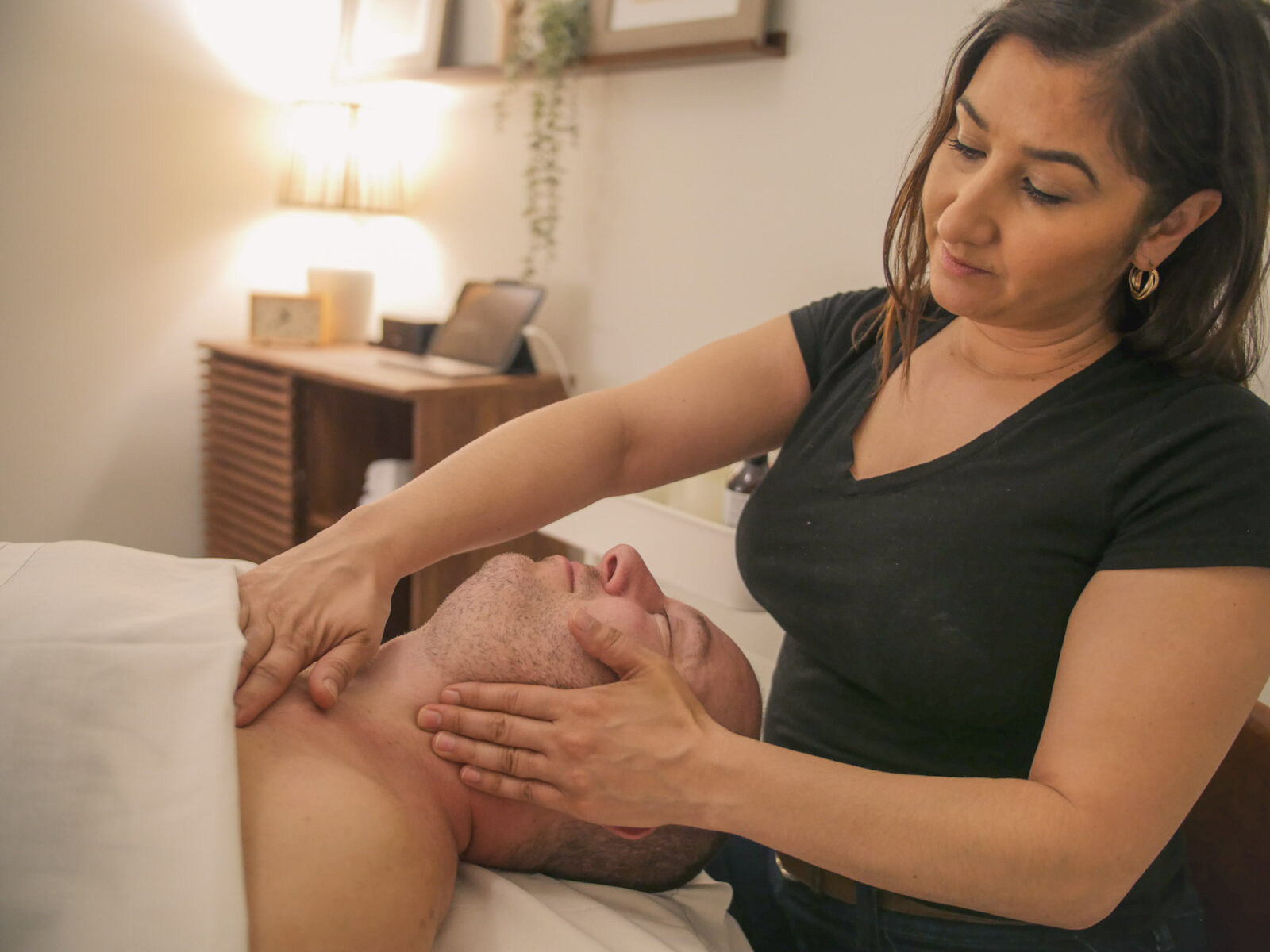
Tension headaches and migraines are among the most common complaints we treat at Myocare. However, they rarely arrive as the stated reason for booking. More often, a client books for neck and shoulder pain or jaw tension. They then mention in the intake that they also get frequent headaches. By the end of the session, they have often experienced a reduction in headache intensity that they were not expecting.
This connection is not coincidental. Most chronic tension headaches and many migraines have a significant muscular and fascial component. That component responds directly to well-targeted manual therapy. This article explains why, covers the different types of headaches and how they relate to the muscles that massage therapy treats, and describes what a headache-focused session at our Toronto clinic looks like.
Understanding the Different Types of Headache
Tension-Type Headaches
Tension-type headaches are the most common type of headache globally. They also have the strongest evidence base for massage therapy treatment. They produce a dull, band-like pressure around the head, sometimes described as a tight cap or a vice. In most cases they affect both sides of the head simultaneously. They do not typically throb or pulsate the way migraines do.
The primary drivers of tension-type headaches are active trigger points in the cervical and cranial muscles. Research has consistently implicated the upper trapezius, the sternocleidomastoid, the temporalis, and the suboccipital muscles as the key generators. These trigger points refer pain in predictable patterns that closely match the headache distribution most sufferers describe. Our article on trigger point therapy explains the mechanism of trigger point referral in detail.
The Suboccipitals: The Most Overlooked Headache Driver
The suboccipital group is a set of four small muscles at the base of the skull. They control fine head position relative to the cervical spine. Forward head posture overloads them continuously because they must work to prevent the head from nodding forward. As a result, they develop trigger points reliably under this sustained load.
Active trigger points in the suboccipitals refer pain that wraps over the top of the skull and behind the eye. This is one of the most common patterns of chronic daily headache. Yet many sufferers treat it with analgesics rather than addressing the source. Releasing the suboccipitals through direct sustained pressure and myofascial work at the cranial base is one of the most reliably effective interventions for headache sufferers.
Cervicogenic Headaches
Cervicogenic headaches originate from structures in the cervical spine: the joints, discs, muscles, and ligaments of the upper cervical region. They are typically unilateral, meaning they affect one side of the head only. They often present with restricted cervical range of motion. Specific neck movements or sustained neck positions usually reproduce or aggravate the pain.
The mechanism involves referred pain from the upper cervical joints and the convergence of cervical and trigeminal sensory information in the brainstem. Cervicogenic headaches respond well to a combination of soft tissue work on the cervical and suboccipital musculature and gentle joint mobilisation of the upper cervical spine.
Migraines
Migraines are a neurological disorder involving recurrent attacks of typically unilateral, pulsating, moderate to severe head pain. They come with nausea, photophobia, and phonophobia. They involve a complex cascade of neurological events including cortical spreading depression and activation of the trigeminovascular system.
Massage therapy does not directly treat the neurological mechanism of migraine. However, it addresses two important contributing factors. The first is the peripheral muscular and fascial tension that can trigger attacks and lower the threshold for subsequent attacks. The second is the sustained sympathetic nervous system activation that increases migraine frequency in many sufferers. Many migraine clients find that regular massage therapy reduces both attack frequency and intensity over time.
How Massage Therapy Treats Headaches
Trigger Point Release in the Cervical and Cranial Muscles
Releasing active trigger points in the upper trapezius, sternocleidomastoid, suboccipitals, temporalis, and masseter directly deactivates the generators of referred headache pain. For clients with chronic tension headaches, this is often the most rapidly effective intervention available. Many experience significant relief during or immediately after a session in which the relevant trigger points have been precisely located and adequately released.
If your headaches come with jaw pain, clicking, or morning jaw soreness, the masseter and pterygoid muscles are important additional targets. See our massage therapy for jaw pain page and TMJ dysfunction treatment service for more on how jaw-related headaches are treated.
Myofascial Release at the Cranial Base
The dura mater surrounds the brain and spinal cord. It has direct connective tissue attachments to the suboccipital muscles and the upper cervical fascia. Restriction in these attachments can influence the mechanical environment of the cranium and contribute to headache patterns that do not respond to purely muscular treatment. Myofascial release techniques at the cranial base and the upper cervical fascia address this level of restriction. They are a key component of headache treatment at Myocare.
Thoracic Spine and Shoulder Girdle Treatment
The cervical spine does not function in isolation. Its mobility depends directly on the thoracic spine and the shoulder girdle. Thoracic stiffness is almost universal in people who sit for a living. It forces the cervical spine to compensate by increasing its own range of motion. Over time this compensation overloads the upper cervical joints and muscles. Therefore, it contributes directly to both cervicogenic headache and the tension patterns that drive tension-type headache.
Consequently, comprehensive headache treatment at Myocare addresses not just the neck and cranial muscles but the thoracic extensors, rib cage mobility, and the shoulder girdle mechanics that feed into the cervical overload pattern.
Nervous System Down-Regulation
Chronic stress and sustained sympathetic nervous system activation are major drivers of tension headache frequency and migraine susceptibility. The pain sensitisation from chronic sympathetic activation lowers the threshold at which normal sensory input feels painful. Massage therapy’s parasympathetic effect directly addresses this driver of chronic headache. It reduces cortisol, lowers baseline muscle tone, improves sleep quality, and reduces the overall activation level of the nervous system.
Many headache clients report that maintaining a regular massage schedule produces a meaningful reduction in headache frequency over time, even when individual sessions do not specifically target the head and neck. The cumulative nervous system effect is a significant part of the benefit.
What a Headache Treatment Session Looks Like at Myocare
A headache-focused session at Myocare typically addresses the cervical spine and upper back musculature, the suboccipital group and cranial base, the jaw and temporalis region when relevant, and the thoracic spine and shoulder girdle. Trigger point therapy and myofascial release are the primary techniques used. For presentations with significant craniosacral or TMJ involvement, referral to our osteopathic practitioners may also be recommended.
Headache Treatment at Myocare: Annex and Leaside
Myocare treats headaches and migraines at two Toronto locations. Our Annex clinic at 1096 Bathurst Street serves clients across the Annex, Seaton Village, Palmerston, and midtown Toronto. Our Leaside clinic at 1517a Bayview Ave, East York serves clients in Leaside, Davisville, Moore Park, Thorncliffe Park, and the Bayview corridor.
If headaches are your primary complaint, mention this when booking so your RMT can plan the session accordingly. Book online or call our Leaside clinic at (416) 265-9606.
Frequently Asked Questions
How quickly will massage therapy help my headaches?
Many clients experience immediate relief or a significant reduction in headache intensity during or after their first session. For clients with chronic tension headaches, a consistent pattern of improvement in frequency and intensity over three to six sessions is typical. Maintaining a regular schedule, even monthly, tends to prevent the accumulation of muscular tension that drives chronic headache patterns.
Can massage help with migraines specifically?
Yes, though the evidence is stronger for tension-type and cervicogenic headaches than for migraines. Massage therapy works best for migraines as a preventative maintenance tool between attacks rather than during an active attack. Working between attacks to reduce baseline cervical tension, lower sympathetic activation, and improve sleep quality tends to reduce attack frequency over time.
Should I book a massage during an active headache?
It depends on the type and severity. During a mild to moderate tension headache, gentle cervical and suboccipital work often provides meaningful relief. During a severe migraine with photophobia, phonophobia, and nausea, attending a treatment session may not be feasible. If you are unsure, call the clinic before attending and describe your current symptoms. Your therapist can advise whether to come in or reschedule.
Is massage covered by insurance for headache treatment?
Yes. RMT treatment is covered under most extended health benefit plans in Ontario regardless of the presenting complaint. Myocare offers direct billing at both our Annex and Leaside locations.
How do I know if my headaches are coming from my neck?
Signs that your headaches have a cervicogenic component include: the headache is consistently on one side; specific neck movements aggravate it; it comes with neck pain or stiffness; it starts at the base of the skull and travels forward; and you can reproduce a similar pain by pressing on specific areas of the neck or upper back. If several of these apply, massage therapy targeting the cervical and suboccipital region is likely to produce meaningful relief.