
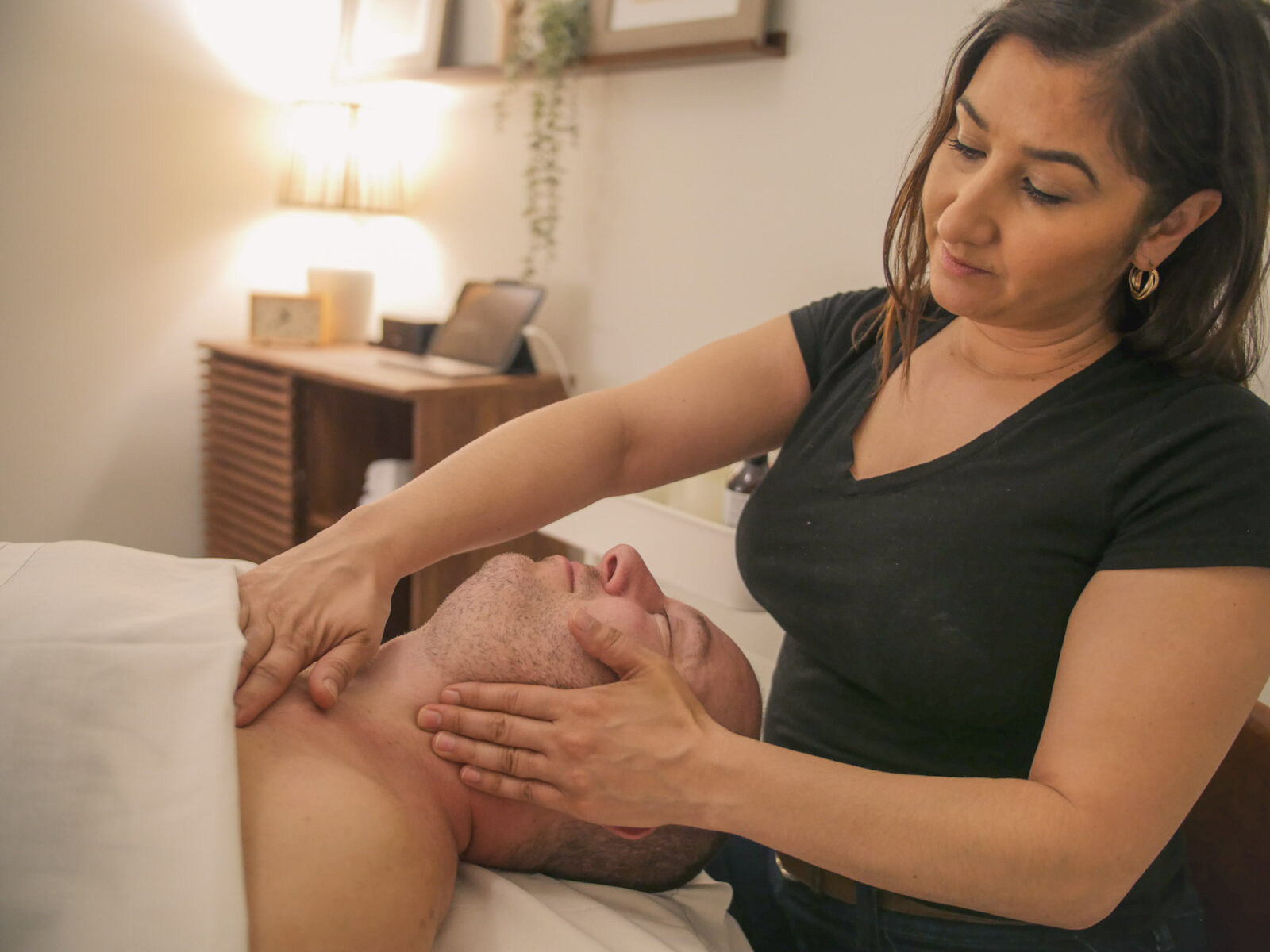
Jaw pain, clicking, morning soreness, and the headaches that seem to start just in front of the ear — these are the signs of temporomandibular joint dysfunction, and they are far more common in Toronto than most people realise. TMJ massage is one of the most effective non-invasive treatments available for this condition. Yet many people who have lived with jaw pain for years have never tried it.
This article explains what TMJ dysfunction actually is, how massage therapy addresses it, and what a treatment session at Myocare looks like.
What Is TMJ Dysfunction?
The temporomandibular joint connects the lower jaw to the temporal bone of the skull. It sits just in front of each ear and allows the jaw to open, close, slide forward, and move sideways. It is one of the most complex joints in the body because it must move in multiple planes simultaneously and must coordinate with the teeth, the cervical spine, and the muscles of mastication.
TMJ dysfunction refers to a range of conditions that affect this joint and the surrounding muscles. It is sometimes called TMD or TMJD. The causes are varied and often overlapping. Bruxism, which is teeth grinding or clenching, is one of the most common. Forward head posture and cervical spine dysfunction also contribute significantly. Stress-driven jaw elevation, bite misalignment, and previous trauma to the jaw or head are additional factors.
At Myocare, TMJ dysfunction treatment addresses the muscular and fascial components of the condition. You can review our massage therapy for jaw pain service page and our TMJ dysfunction treatment page for full details on what is offered.
Symptoms of TMJ Dysfunction
TMJ dysfunction produces a wider range of symptoms than most people expect. Many clients who come to Myocare for neck and shoulder pain or headaches discover during their intake that their symptoms have a significant TMJ component. Common presentations include:
- Pain or tenderness in the jaw, face, or in front of the ear.
- Clicking, popping, or grating sounds when opening or closing the mouth.
- Restricted jaw opening or a jaw that catches or locks.
- Morning jaw soreness or fatigue from overnight clenching.
- Tension headaches that originate at the temples or behind the eye.
- Neck and shoulder tension that worsens when the jaw is under load.
- Ear fullness, ringing in the ears, or difficulty chewing.
Furthermore, TMJ dysfunction and cervical dysfunction rarely occur in isolation. The trigeminal nerve, which innervates the jaw, and the cervical nerves share processing pathways in the brainstem. As a result, pain and tension in the jaw regularly produces symptoms in the neck and head, and vice versa.
How Does TMJ Massage Therapy Work?
Assessment First
Every TMJ treatment session at Myocare begins with a thorough intake and assessment. Your RMT will ask about the onset and nature of your symptoms, whether you grind your teeth, your stress levels, and your sleep quality. They will assess your jaw range of motion, observe your jaw movement patterns, and palpate the relevant muscles to identify which are most restricted and whether active trigger points are present.
This assessment is essential. TMJ dysfunction is a multifactorial condition and the treatment approach must reflect what is driving the pattern in your specific case. A generic jaw massage without this assessment is unlikely to produce meaningful or lasting results.
Extraoral Massage of the Masticatory Muscles
The primary muscles of mastication are the masseter, the temporalis, the medial pterygoid, and the lateral pterygoid. The masseter runs along the lateral face from the cheekbone to the lower jaw. It is one of the strongest muscles in the body relative to its size. In people with bruxism or chronic jaw clenching, it is almost always hypertonic and contains active trigger points that refer pain into the jaw, face, and temple.
The temporalis is a fan-shaped muscle on the side of the skull responsible for closing the jaw and pulling it back. Trigger points in the temporalis refer pain into the teeth and temple and are a primary driver of the headaches that many TMJ sufferers experience.
Extraoral massage of these muscles uses direct pressure, trigger point release, and slow myofascial techniques along the muscle belly and at their bony attachments. This work is often immediately noticeable. Many clients feel a significant release in jaw and facial tension during the session itself.
Intraoral Massage of the Pterygoid Muscles
The medial and lateral pterygoid muscles sit on the medial aspect of the jaw and are not accessible from the outside. They play a critical role in jaw opening, protrusion, and lateral movement. In chronic TMJ dysfunction, these muscles are often significantly overloaded and contain active trigger points that contribute to jaw pain, restricted opening, and referred ear pain.
Intraoral massage, which involves gloved work inside the mouth on these muscles, is one of the most effective and underutilised techniques in TMJ treatment. At Myocare, intraoral work is offered by RMTs with specific training in this technique. Your consent is obtained before any intraoral work begins and the approach is adapted based on your tolerance and presentation.
Cervical and Suboccipital Work
Because the cervical spine and the jaw are neurologically and structurally interconnected, effective TMJ treatment at Myocare almost always includes work on the cervical region. The suboccipitals, the upper trapezius, and the sternocleidomastoid all contribute to the TMJ pain pattern. Additionally, forward head posture is one of the most consistent structural drivers of TMJ overload. Addressing these cervical components alongside the jaw muscles produces more complete and lasting results. You can read more about how we treat the cervical region in our dedicated article on neck and shoulder massage in Toronto.
Myofascial Release Along the Jaw and Cervical Fascia
The fascia of the jaw, face, and cervical region forms a continuous sheet that connects the jaw structures to the cervical spine and the cranium. Restrictions in this fascial layer can maintain TMJ dysfunction even after the muscular trigger points have been released. Myofascial release techniques along the jaw and cervical fascia address this deeper level of restriction and are a key part of comprehensive TMJ treatment at Myocare.
TMJ and Acupuncture: A Complementary Approach
For clients whose TMJ dysfunction has a significant nervous system or stress component, combining massage therapy with acupuncture can produce better outcomes than either alone. Acupuncture targeting the jaw, face, and cervical region can reduce pain sensitisation and support nervous system down-regulation alongside the structural work that massage therapy provides.
TMJ Massage at Myocare: Annex and Leaside
Myocare treats TMJ dysfunction at two Toronto locations. Our Annex clinic at 1096 Bathurst Street serves clients across the Annex, Seaton Village, Palmerston, and midtown Toronto. Our Leaside clinic at 1517a Bayview Ave, East York serves clients in Leaside, Davisville, Moore Park, Thorncliffe Park, and the Bayview corridor.
If TMJ dysfunction or jaw pain is your primary complaint, mention this when booking. Our admin team will match you with an RMT who has specific experience in TMJ treatment. You can review our team of practitioners before booking. Book online or call our Leaside clinic at (416) 265-9606.
How Many Sessions Will I Need?
TMJ dysfunction that has been present for months or years does not resolve in a single session. However, many clients notice significant improvement after two to three sessions. The typical treatment course for moderate TMJ dysfunction is four to eight sessions, with maintenance sessions every four to six weeks thereafter to prevent re-accumulation.
Clients who address the lifestyle factors that drive TMJ dysfunction, particularly stress management, sleeping posture, and daytime jaw habits, tend to hold their results longer between sessions. Your RMT will discuss these factors and may provide specific self-care recommendations at the end of your first session.
Frequently Asked Questions
Is TMJ massage painful?
Work on the masseter and temporalis can be intense in areas carrying significant restriction or active trigger points. However, the sensation should be productive rather than sharp or alarming. Intraoral work, in particular, is less uncomfortable than most clients expect. Tell your RMT immediately if the pressure is too much. They will adjust without hesitation.
Can massage cure TMJ dysfunction?
Massage therapy is highly effective at reducing the muscular and fascial component of TMJ dysfunction. For presentations where bruxism, bite misalignment, or structural joint pathology are significant drivers, massage therapy works best alongside dental or medical management rather than as a standalone treatment. Your RMT will be transparent about what massage can and cannot achieve for your specific presentation.
Is TMJ massage covered by insurance in Ontario?
Yes. RMT treatment for TMJ dysfunction is covered under most extended health benefit plans in Ontario. Myocare offers direct billing to most major insurers at both our Annex and Leaside locations.
Should I see a dentist or an RMT for TMJ dysfunction?
Both can be part of an effective treatment plan. Dentists address the dental and occlusal components of TMJ dysfunction, including night guards for bruxism. RMTs address the muscular, fascial, and postural components. For most clients, a combined approach produces the best outcomes. If you are unsure where to start, book with your RMT first for an assessment. They will advise you on whether a dental referral is also indicated.
How does stress make TMJ dysfunction worse?
Stress activates the sympathetic nervous system and raises baseline muscle tone throughout the body. The jaw and neck carry a disproportionate share of this increase. Many people clench their jaw unconsciously during periods of high stress, both during the day and overnight. Regular massage therapy reduces the baseline tension that stress accumulation creates and can meaningfully reduce the frequency and severity of TMJ flare-ups.