
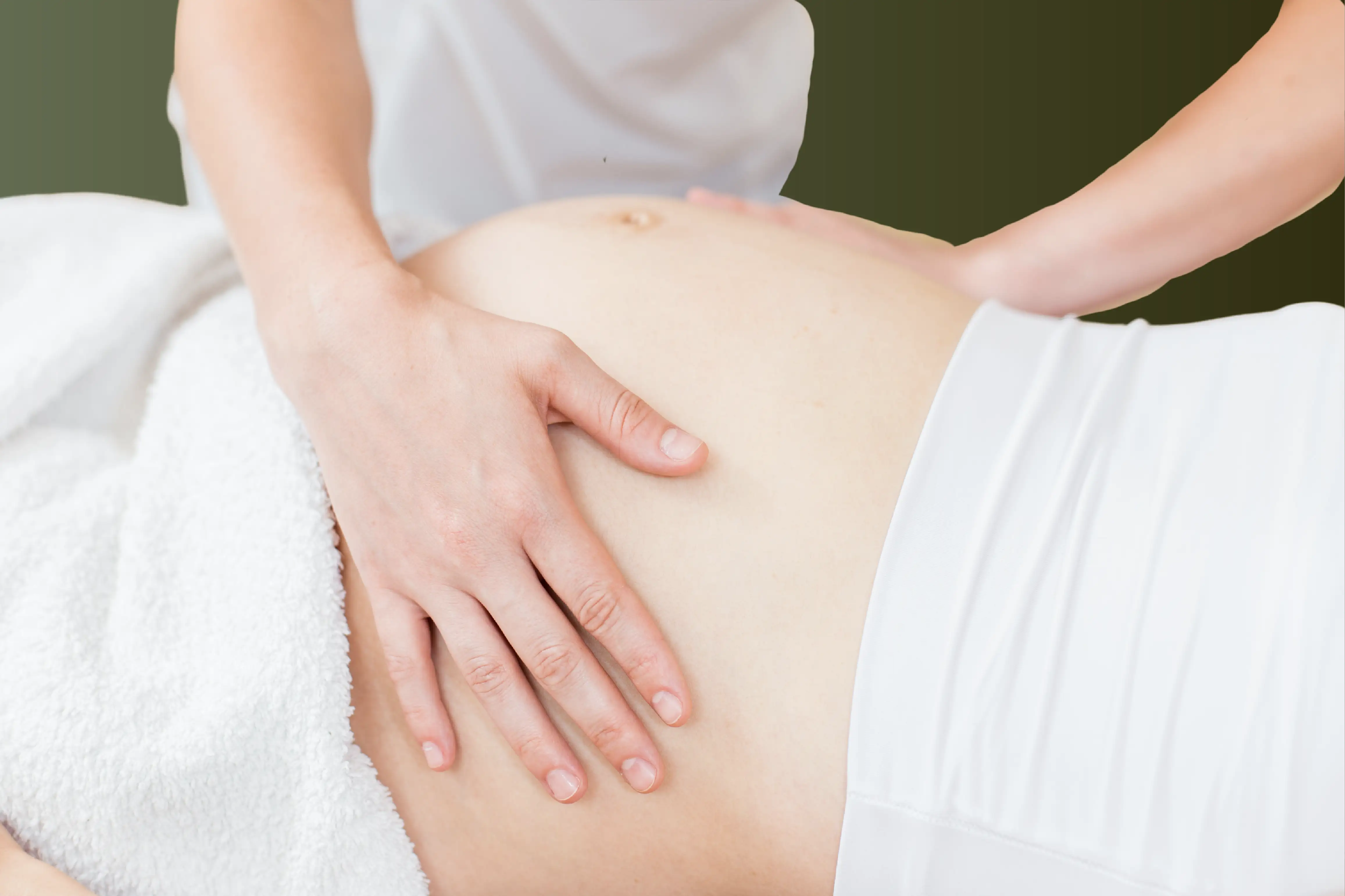
Pregnancy is physically demanding in ways that are hard to describe until you’re in it. By the second trimester, the structural load on your lower back, hips, and pelvis has increased significantly. By the third, sleep is disrupted, swelling is common, and the nervous system is running at a sustained high. Massage for pregnant clients isn’t a luxury add-on to prenatal care — for many, it becomes a core part of how they get through each week.
This page covers what the research and clinical practice actually show about pregnancy massage benefits, what a session at our Toronto clinic involves, and what you should realistically expect from your first visit.
What Is Prenatal Massage Therapy?
Prenatal massage is massage therapy specifically adapted for pregnancy. The word ‘adapted’ is doing a lot of work there — it’s not just a regular massage with the client on their side. A trained Registered Massage Therapist (RMT) modifies technique, positioning, pressure, and focus areas based on which trimester you’re in, what’s presenting clinically, and your individual health history.
In Ontario, prenatal massage must be performed by a Registered Massage Therapist — a regulated health professional governed by the College of Massage Therapists of Ontario (CMTO). This matters when you’re searching for the best prenatal massage near you: a wellness practitioner or aesthetician is not the same credential, even if the service is marketed similarly.
At Myocare, we offer both standard pregnancy massage and a more specialized Advanced Prenatal and Postnatal Massage — the latter involving more complex techniques including external pelvic floor work, direct abdominal work, and pelvic mobilization for clients managing acute pain or injury during pregnancy.
What Are the Benefits of Prenatal Massage?
The benefits of massage during pregnancy are both structural and systemic. Here’s what the evidence and clinical experience at our clinic consistently show:
1. Significant Reduction in Low Back and Hip Pain
Low back pain affects the majority of pregnant people at some point — estimates in the research consistently place it above 50%, with some studies citing rates closer to 70% by the third trimester. The cause is multifactorial: hormonal loosening of ligaments (driven by relaxin), the forward shift in center of gravity, and compensatory patterns in gait all contribute to lumbar and sacroiliac loading.
Targeted massage work on the lumbar erectors, quadratus lumborum, glutes, and piriformis directly addresses the muscles working hardest to compensate for postural changes. For sciatica-pattern pain — the shooting or aching discomfort down the back of the leg — focused work around the posterior hip often provides meaningful, lasting relief that other interventions don’t match.
2. Reduced Swelling in the Legs, Ankles, and Feet
Pregnancy-related edema — swelling caused by fluid retention and reduced venous return — is extremely common, particularly in the second and third trimesters. Blood volume increases by roughly 40–50% during pregnancy, and the growing uterus places pressure on the inferior vena cava, slowing return from the lower extremities.
Gentle massage techniques that support lymphatic and venous circulation can help move this fluid effectively. Our clinic also offers Advanced Decongestive Lymphatic Treatments — a more specialized approach for clients managing significant or persistent swelling.
Note: sudden, asymmetric, or rapidly worsening swelling should always be evaluated by your medical provider before you book a massage, as it can be a sign of preeclampsia.
3. Better Sleep
Sleep disruption in pregnancy is cumulative and often underestimated as a health concern. Position restrictions, frequent urination, leg cramps, and musculoskeletal discomfort all interfere with restorative sleep. Poor sleep is also associated with higher rates of prenatal anxiety and depression, making it clinically significant beyond just comfort.
Massage supports sleep through two main pathways. First, by reducing the physical discomfort — back pain, hip tension, leg heaviness — that interrupts sleep. Second, by activating the parasympathetic nervous system, which promotes the kind of physiological downregulation needed for quality rest. Clients frequently report that their best sleep of the week follows a prenatal massage session.
4. Reduced Anxiety and Stress
Pregnancy involves sustained psychological load — medical appointments, uncertainty, physical change, work pressures, relationship shifts. The nervous system responds to all of this, and chronically elevated cortisol during pregnancy is associated with adverse outcomes for both the birthing parent and the developing baby.
Massage has a well-documented effect on cortisol reduction and parasympathetic activation. Research by Dr. Tiffany Field at the Touch Research Institute at the University of Miami has shown reductions in cortisol, anxiety scores, and self-reported depression in pregnant women receiving regular massage. [Editorial note: verify specific study parameters before publishing — Field et al., Journal of Psychosomatic Obstetrics & Gynecology, 2004 is the most cited.] Beyond the hormonal effect, many clients describe the dedicated, uninterrupted hour as one of the few times in their week they’re genuinely not ‘on.’
5. Relief from Headaches and Neck and Shoulder Tension
Postural changes in pregnancy — the forward head shift, rounded shoulders, and thoracic compression that tend to develop alongside a growing belly — place significant load on the cervical spine and upper back. Add the sleep position constraints, and tension headaches become increasingly common across the second and third trimesters.
Focused work on the upper trapezius, levator scapulae, suboccipitals, and thoracic extensors often provides relief that persists well beyond the session itself. For clients who arrive with a tension headache in progress, careful work in these areas can reduce intensity within the treatment.
6. Sciatic Nerve Pain Relief
Pregnancy-related sciatica is often a compression or irritation pattern originating in the posterior hip — specifically the piriformis and the deep external rotators — rather than a true disc herniation (though that can also occur during pregnancy). The presentation is typically a deep aching or shooting pain that travels down the back of the thigh and sometimes into the calf.
Sustained pressure and targeted release work in the gluteal region can reduce nerve compression and relieve symptoms considerably. This is one of the most common reasons clients book pregnancy massage therapy, and often one of the most dramatic in terms of immediate response.
7. Improved Body Awareness and Labour Preparation
This benefit is harder to quantify, but consistently reported by clients who maintain a regular prenatal massage practice. Spending structured time attending to the body — rather than just managing it — tends to improve proprioceptive awareness, reduce dissociation from physical sensation, and build confidence heading into labour. Some of our advanced prenatal specialists, particularly Kenny Karst, integrate breath work and body awareness into sessions for clients who are approaching term.
Benefit | What’s Driving It |
Low back & hip pain relief | Releases lumbar erectors, QL, glutes, and piriformis overloaded by postural shifts |
Reduced swelling | Supports venous return and lymphatic flow impaired by increased blood volume and uterine pressure |
Better sleep | Reduces physical discomfort and activates parasympathetic nervous system |
Lower anxiety and cortisol | Documented effect on stress hormone regulation through sustained therapeutic touch |
Headache relief | Decompresses upper traps, levators, and suboccipitals strained by postural changes |
Sciatica relief | Releases piriformis and deep hip rotators compressing the sciatic nerve |
Labour preparation | Builds body awareness and nervous system resilience heading into delivery |
What to Expect at Your First Prenatal Massage in Toronto
If you’re new to massage therapy, or new to pregnancy massage specifically, here’s what a first session at Myocare actually looks like.
Before Your Session: Health Intake
Before any treatment begins, your RMT will conduct a health intake. This is a structured conversation — not a form you fill out in a waiting room — covering your gestational stage, any complications or high-risk factors, your current symptoms, medications, and what you’re hoping to address. This intake is what allows the session to be genuinely personalized rather than templated.
If you have any conditions that require medical clearance — preeclampsia, placenta previa, a history of DVT, pre-term labour risk — this is where that gets identified. We would rather have that conversation before the session than proceed without full information.
Positioning: What Side-Lying Actually Looks Like
Most prenatal massage after the first trimester is performed in a side-lying position, supported by bolsters and pillows that keep you stable and comfortable. At Myocare, we also have the option of pregnancy massage pillows — a specialized bolster system that allows clients to safely lie face-down during treatment, which many people find deeply comfortable after months of not being able to.
You are always draped and covered throughout the session, with only the area being actively treated exposed. Side-lying positioning means you can fully relax without managing your own balance or stability.
During the Session: Pressure, Focus, and Communication
Prenatal massage is not light-touch by default — pressure is adapted to the area and your tolerance, not automatically reduced across the board. Work on the glutes, thoracic spine, and upper back can involve moderate sustained pressure; work near the abdomen and lower limbs is considerably gentler. Your RMT will check in throughout.
Sessions run 30 to 90 minutes depending on what you book. For most clients managing specific physical complaints — low back pain, sciatica, edema — 60 to 75 minutes allows enough time to address the priority areas thoroughly without being exhausting.
After Your Session
You’ll be given time to reorient before getting up — important because the parasympathetic shift that happens during a good prenatal massage can leave you temporarily slower and heavier than usual, which is normal. Drink water, take your time getting dressed, and avoid booking anything demanding immediately afterward if you can.
Some clients experience light muscular soreness in the 24 hours following treatment, particularly if the session addressed areas carrying significant chronic tension. This resolves quickly and is not a cause for concern.
How Often Should You Get Prenatal Massage?
There’s no universal answer, but these are the patterns we typically see at our clinic:
- First trimester: monthly sessions, or as-needed for specific symptoms like neck tension or nausea-related postural strain
- Second trimester: every two to three weeks, especially as low back and hip pain becomes more pronounced
- Third trimester: weekly or every two weeks for many clients, as physical demands peak and sleep disruption intensifies
Your RMT will make a recommendation based on your presentation. Clients managing acute pain — significant sciatica, SI joint instability, severe edema — will typically benefit from more frequent sessions, at least initially. The goal is to stay ahead of the accumulation, not to treat the peak.
Postnatal Massage: The Recovery Period Is Just as Important
The physical demands don’t end at delivery. The postpartum period involves its own set of structural challenges: the body returning from its pregnancy posture, the physical demands of feeding and carrying a newborn, disrupted sleep, and — for C-section deliveries — surgical recovery.
Postnatal massage at Myocare addresses:
- Postural rehabilitation — reversing the forward head position, rounded shoulders, and lumbar loading of late pregnancy
- Upper back and neck tension from feeding and carrying positions
- Core re-engagement support — massage can help restore awareness of the abdominal region as part of broader recovery
- Nervous system regulation — new parenthood involves sustained stress; therapeutic massage supports recovery of the parasympathetic baseline
For caesarean deliveries, we wait until the incision has healed and your provider has given clearance before any direct work in that region. Most postpartum massage begins comfortably within the first few weeks for vaginal deliveries, and within six to eight weeks for C-sections.
See full details on our Advanced Prenatal and Postnatal Massage page.
Why Choose Myocare for Maternity Massage in Toronto?
When people search for pregnancy massage therapy near them in Toronto, they typically get a mix of spas, wellness studios, and clinical practices. The distinction matters more during pregnancy than at any other time.
At Myocare:
- Every prenatal massage is performed by a Registered Massage Therapist — a provincially regulated health professional, not a wellness provider
- Several of our RMTs specialize specifically in pregnancy care, including Kenny Karst (advanced prenatal and postnatal specialist with training in pelvic health, birth support, and trauma-informed care), Adriana Petrik (18+ years of experience, including pregnancy massage), Alexandra Whyte, and Margot Mostyn (25+ years in practice)
- We use pregnancy pillows and full bolster systems — proper clinical equipment, not improvised cushion setups
- Health intake is conducted before every session — it’s not optional or rushed
- We offer direct billing to most major insurers, and most extended health plans cover RMT treatment
We’ve been practicing at 1096 Bathurst Street in the Annex since 2010. Pregnancy care is one of the areas where clinical depth genuinely shows — and it’s not something we approach casually.
Questions about whether prenatal massage is right for where you are in your pregnancy? Our FAQ page covers a range of common concerns, or you can call us directly at (416) 995-6601.
Frequently Asked Questions
What does massage for pregnant clients actually feel like?
Most clients describe the experience as deeply relaxing — more so than a standard massage, in part because the parasympathetic nervous system response during pregnancy is heightened. The session is quieter, slower-paced, and more attentive to comfort than a typical deep-tissue appointment. You’re supported from every angle and don’t need to hold any position yourself.
Is pregnancy massage therapy covered by insurance in Toronto?
Yes, in most cases. Extended health benefits in Ontario typically cover RMT treatment, including prenatal massage, when performed by a registered practitioner. Myocare offers direct billing to most major insurers. Check your plan’s annual RMT coverage limit, as prenatal massage sessions count toward the same pool as any other massage therapy sessions.
How is maternity massage different from a regular massage?
Positioning, technique, and intent are all different. A standard relaxation massage assumes a body without the structural changes and circulation dynamics of pregnancy. Prenatal massage uses side-lying support, adapts pressure to avoid contraindicated areas, and prioritizes the specific symptom pattern that pregnancy creates — low back loading, sciatic irritation, edema, upper back tension from postural change.
What’s the difference between regular pregnancy massage and advanced prenatal massage?
Standard pregnancy massage addresses common complaints through general massage techniques adapted for pregnancy. Advanced prenatal massage — available with Kenny Karst at Myocare — goes further, incorporating external pelvic floor work, direct abdominal work, pelvic mobilization, and decongestion techniques. It’s designed for clients managing more complex or acute pain during pregnancy, not just general discomfort.
How do I find the best prenatal massage near me in Toronto?
Look for an RMT designation (not just ‘massage therapist’), confirmed training in prenatal care, proper side-lying equipment, and a health intake process. Reading reviews for specific practitioners — rather than just the clinic overall — gives a more accurate picture of what the experience will be like. At Myocare, practitioner profiles are available on our website so you can review training backgrounds before booking.
Can prenatal massage help with morning sickness?
Not directly, and we wouldn’t make that claim. However, massage during the first trimester — when nausea is most intense — can support the nervous system, reduce stress and fatigue, and address the postural tension that comes with spending time hunched or fatigued. Some clients report that the relaxation response following a session provides temporary relief, but nausea management is not a primary indication for prenatal massage.
Should I tell my midwife or OB that I’m getting prenatal massage?
Yes, and it’s worth mentioning at your next appointment rather than treating it as a separate track. Most obstetric providers are supportive of prenatal massage with a qualified RMT. If you’re managing a high-risk pregnancy, your provider may want to be involved in the treatment conversation, which your Myocare RMT can facilitate.
Ready to Book? Here’s How to Get Started
If you’re looking for pregnancy massage therapy in Toronto — whether you’re early in the first trimester and managing fatigue, mid-pregnancy dealing with sciatica, or approaching your due date and struggling with sleep — Myocare has a prenatal specialist for where you are right now. Browse our practitioners, review our services and rates, and book online at a time that works for you.
Not sure whether standard prenatal massage or the advanced option is right for your situation? Call us at (416) 995-6601 — we’re happy to talk through what you’re managing and match you with the right practitioner.